Cosmetic vs Restorative Dentistry: What’s the Difference and Which Do You Need?
Cosmetic vs Restorative Dentistry: What’s the Difference and Which Do You Need?

If you have ever walked out of a dental office unsure whether the treatment you were quoted was about how your smile looks or how it actually works, you are in good company. Here is the short version: cosmetic dentistry improves the appearance of your teeth and gums, while restorative dentistry repairs and rebuilds teeth that are damaged, decayed, or missing. The two overlap constantly, which is exactly why the labels cause so much confusion at the front desk. At Present Dental in Oklahoma City, we believe a confident decision starts with a clear explanation, so we walk every patient through which type of care fits their goals, their oral health, and their budget before any treatment begins.
This Article Will Address
- The real difference between cosmetic and restorative care
- Whether a dental crown counts as cosmetic or restorative
- How a single procedure can do both jobs at once
- What separates a general dentist from a cosmetic dentist
- How dental insurance usually treats cosmetic work
What’s the Difference Between Cosmetic and Restorative Dentistry?
The difference comes down to purpose. Restorative work brings damaged or missing teeth back to full health and function, while cosmetic work refines the look of a smile that is already sound. One solves a problem you can feel when you bite or chew, and the other polishes something you mainly notice in the mirror. In real life, most patients need a little of both over the years, and the healthiest plan almost always addresses function first. Skipping a restorative issue to jump straight to a cosmetic upgrade rarely pays off, since veneers or whitening placed over an unhealthy tooth tend to fail early.
Restorative dentistry tends to include treatments like these:
- Fillings that repair cavities and stop decay from spreading
- Crowns that cap and strengthen a broken or worn tooth
- Bridges and dentures that replace one or several missing teeth
- Dental implants that rebuild a tooth from the root up
- Root canal therapy that saves a tooth from infection
Cosmetic dentistry, by contrast, is centered on appearance and confidence:
- Professional teeth whitening that lifts stains and brightens enamel
- Veneers that reshape and resurface the front teeth
- Dental bonding that closes small gaps and hides chips
- Contouring that evens out slightly uneven edges
A simple way to keep it straight: restorative care answers the question, is this tooth healthy and whole? Cosmetic care answers a different one, do I love how this smile looks? A thorough exam is what tells us where a given tooth actually falls, and often a single visit touches on both.
Is a Dental Crown Cosmetic or Restorative?
A dental crown is primarily a restorative treatment, even though it almost always improves how a tooth looks at the same time. Its main job is to cover and protect a tooth that has been weakened by a large cavity, a crack, heavy wear, or a root canal.
A dentist typically recommends a dental crown to:
- Rebuild a tooth after a deep cavity or root canal
- Protect a cracked or worn tooth from breaking further
- Restore normal, comfortable chewing and speaking
- Anchor a bridge or complete a dental implant
Because modern crowns are shade matched to your natural teeth, the finished result blends right in. So while the reason for placing the crown is restorative, the payoff is very often cosmetic too. That dual nature is a perfect example of why the two categories are so hard to separate.
Can One Procedure Be Both Cosmetic and Restorative?
Yes, and it happens far more often than most people expect. A single procedure frequently repairs a tooth and improves its appearance in the very same appointment, which is a big reason the two categories blur together. A tooth colored filling restores a decayed tooth and blends in far better than old silver metal. A crown rebuilds a fractured molar and makes it look whole again. Bonding can seal a small chip while smoothing the shape of the tooth. Dentists sometimes call this aesthetic restorative care, and it is one of the most common reasons a treatment plan will not fit neatly into a single box.
At our office, tools like an intraoral scanner and tooth colored materials make it easier to repair a tooth and match it to the rest of your smile without goopy impressions or a second lab visit. The goal is always the same: function and appearance working together instead of competing. For many patients, that overlap is welcome news, because it means fewer appointments and a smoother path from a problem tooth to a smile they are proud of.
What’s the Difference Between a General Dentist and a Cosmetic Dentist?
Every cosmetic dentist begins as a general dentist. The real difference is focus and additional training, not a separate license, because cosmetic dentist is not a formally recognized dental specialty. A general dentist handles the full spectrum of oral health, from cleanings and fillings to crowns and extractions. A dentist who emphasizes cosmetic care simply invests extra time and continuing education into the artistry side of the work, things like veneers, smile design, and precise shade matching.
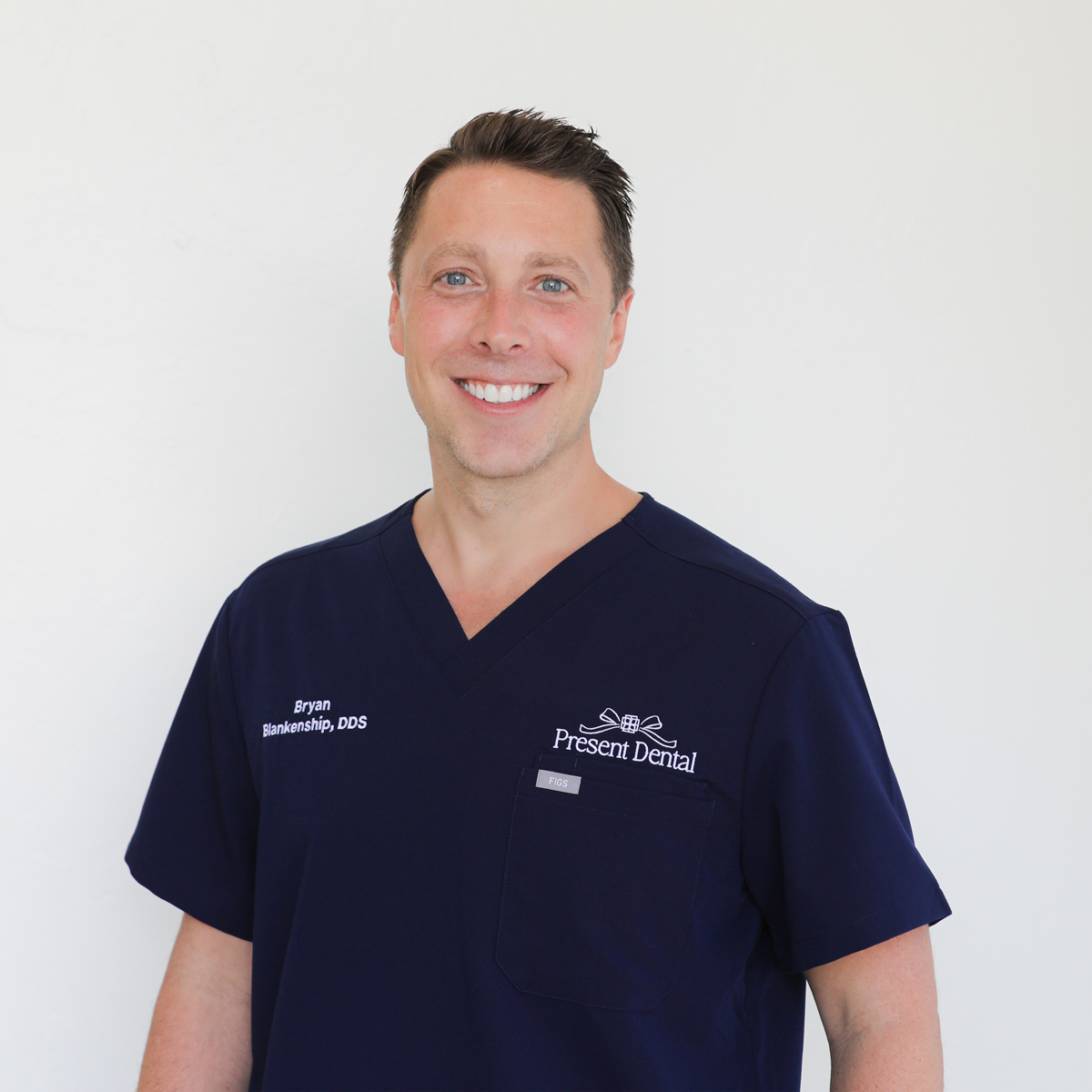
Dr. Bryan Blankenship completed a residency with advanced training in cosmetic and implant dentistry, which means one doctor can guide you across both restorative repairs and cosmetic upgrades. You can review our full menu of dental services to see how that combined approach comes together under one roof, which spares you the hassle of being referred all over town. Both dentists here keep up with modern techniques and technology, so the standard of care stays consistent no matter which service brings you in.
Does Dental Insurance Cover Cosmetic Dentistry?
In most cases, dental insurance does not cover purely cosmetic dentistry, because insurers treat appearance-only work as elective. Whether a treatment is covered usually depends on one thing: does it restore health and function, or does it only change how a tooth looks?
Here is how coverage generally breaks down, keeping in mind that every plan is different:
- Often covered, at least in part: fillings, crowns on damaged teeth, root canals, and tooth replacement after loss
- Usually not covered: teeth whitening, veneers placed purely for appearance, and cosmetic bonding
There is also a gray area worth knowing about. A crown placed on a broken tooth may qualify for partial coverage because it restores function, even though it also improves the tooth’s appearance. Before you commit to anything, ask for a written treatment estimate and confirm the details with your insurance carrier. We are always happy to help you understand your benefits so there are no surprises. If a treatment is not covered, our transparent, up-front approach to cost helps you plan for it without pressure.
Book Your Cosmetic or Restorative Consultation at Present Dental
Whether you are hoping to brighten a dull smile or you need to rebuild a tooth that has seen better days, you do not have to sort out the cosmetic versus restorative question on your own. Present Dental is open and welcoming new and returning patients throughout Oklahoma City, OK, and our friendly team will help you build a plan that protects your oral health and gives you a smile you feel good about. Schedule your consultation today, and let’s talk through the options that make the most sense for you.
Sources
Meet Dr. Blankenship
Dr. Bryan M. Blankenship’s roots in Oklahoma City run through his military service in the Oklahoma Army National Guard. His calling to dentistry took hold during his deployment to Baghdad, and he came home knowing what he wanted to do with the rest of his career.
He graduated from the University of Central Oklahoma in 2010 with a bachelor’s degree in biology, then earned his Doctorate of Dental Surgery from the University of Oklahoma College of Dentistry in 2016.
Rather than head straight into practice, he stayed on at the University of Oklahoma for a one-year residency in Advanced Education in General Dentistry, training specifically in dental implants, cosmetic dentistry, and a range of other restorative procedures. That extra year matters for patients. Implant placement and full-mouth restorative work are cases many general dentists refer out, so his patients can often finish treatment in one office with a dentist who already knows their history.
Outside the practice, family comes first. His wife, Christy, is also a dental professional, and together they’re raising their two children, Bailey and Beau. You’ll find the family at Thunder games during the season, traveling somewhere new when they get the chance, or out fishing whenever Oklahoma weather cooperates.